


Most corporate training is delivered, but not absorbed.
Sessions are attended, materials are shared, and information is technically available. Still, a large part of it doesn’t translate into day-to-day work. People forget, misunderstand, or simply don’t return to the material when they need it.
At this point, it’s practically the “Hello World” of industry writing to say that working life is changing faster than ever. And while the phrase might be getting tired, the reality behind it keeps finding new ways to surprise us.
If the world insists on changing every five minutes, the only sensible response is to keep learning every six.
This is where traditional training approaches start to fall short.
Best learning doesn’t always happen on schedule
Traditional training is built around specific moments: onboarding days, workshops, scheduled sessions. These formats are useful for introducing topics, but they assume that learning happens at the same time for everyone.
In practice, most learning happens later, when the knowledge is needed.
This is where many training approaches fall short. The information may have been shared, but it is not available in a way that supports real usage.
The gap between information and understanding
Written materials and presentations can communicate information, but they do not always make it easy to understand how something works in practice.
Video helps close this gap.
Demonstrations, walkthroughs, and real examples provide context that is difficult to convey in text alone. Seeing how something is done, step by step, often removes ambiguity and reduces the need for additional explanation.
Returning to the material matters
One of the main differences in video-based learning is not just how content is delivered, but how it is used afterwards.
Instead of relying on memory or notes, employees can return to the material when needed. This supports reinforcement, which is essential for learning but often missing in traditional training.
A short explanation viewed at the right moment is often more effective than a longer session that is not revisited.
Live learning still has a role
Workshops, webinars, and live sessions remain important, especially when discussion or interaction is required.
Their value increases when they are not treated as one-time events.
Recording and organising these sessions allows them to support learning beyond the initial audience. Over time, they become part of a broader set of resources that employees can use when needed.


Structuring content so it can be used
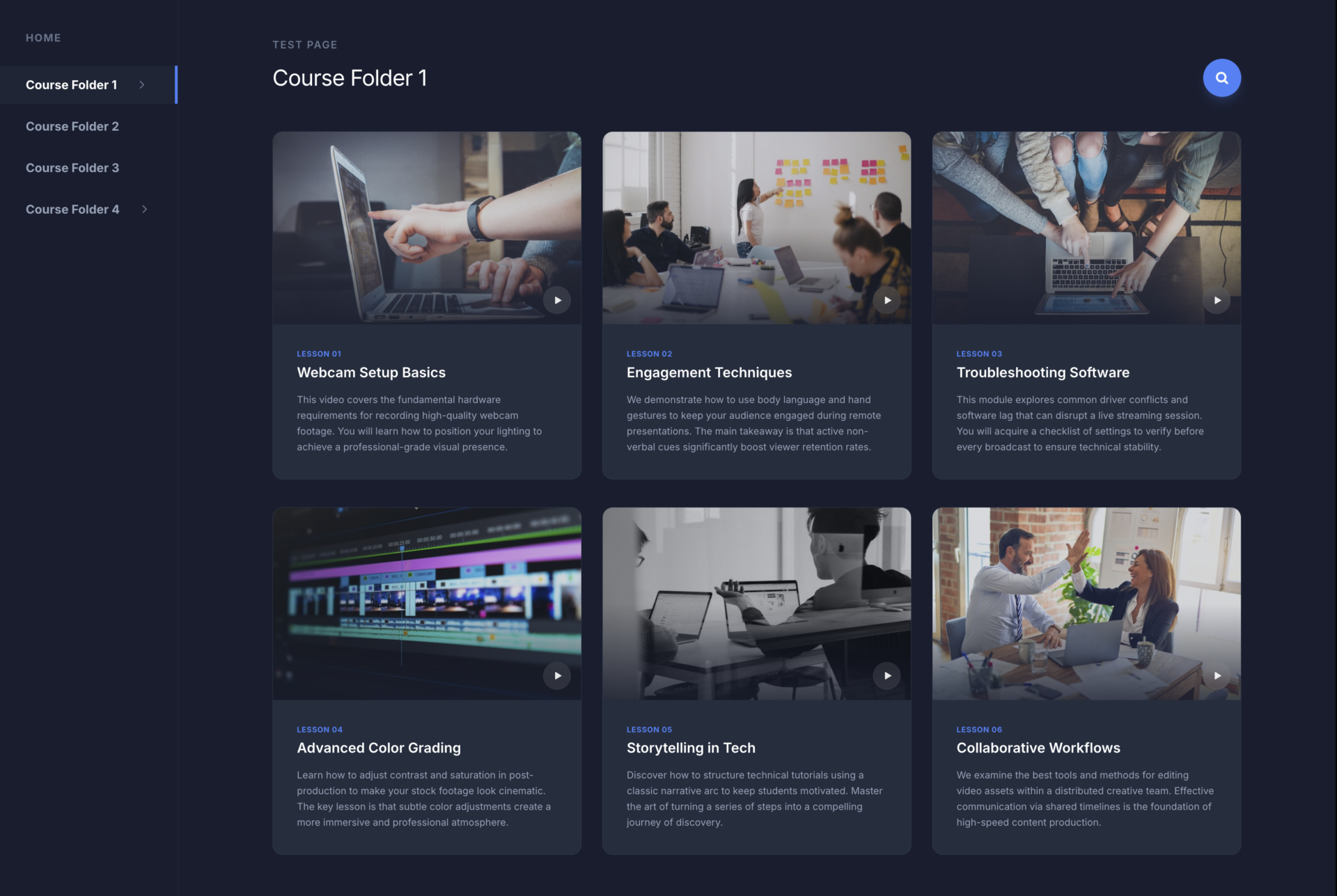
Making content available is not enough on its own. If employees cannot find or navigate it easily, it will not be used.
This is why structure matters. Organising content by topic, role, or task makes it easier to locate relevant material quickly, especially in situations where time is limited.
In practice, this often determines whether training content is actually used or not.
Understanding what works
Digital learning also makes it possible to see how content is used.
Data on viewing patterns and completion rates provides insight into what supports learning and what does not. This allows organisations to improve training materials over time, focusing on what is actually useful rather than what is assumed to be useful.
A more practical approach to learning
Improving workplace learning is not only about creating more content or delivering more sessions.
It is about making learning easier to apply in real situations.
Video supports this by making information clearer, easier to revisit, and more closely aligned with how people work.
When learning is available at the right time, in a format that supports understanding, it becomes more likely to have a practical impact.